
The companies that have defined the AI boom share a problem they rarely advertise: they are running short of clean power, and Britain’s waste could help address it.
Long before data centres existed, astronomer Nikolai Kardashev proposed that civilisations could be measured by the energy they command. A Type I civilisation harnesses all the energy available on its planet. Humanity remains a sub-Type I civilisation, typically estimated at around Type 0.72 to 0.75, still dependent on fossil reserves rather than fully harnessing the energy available to it. The AI boom can be viewed as the latest and most rapid attempt to climb that scale.
The headline numbers emerging from the artificial intelligence sector have begun to read less like technology news and more like national infrastructure. On 1 June, Anthropic, the company behind the Claude AI assistant, confidentially filed for a US stock market listing at a valuation approaching $1 trillion. Morgan Stanley, Goldman Sachs and JPMorgan are expected to lead the offering. It is not the only one. SpaceX has completed the largest IPO in stock market history, raising $75 billion on Nasdaq at a $1.75 trillion valuation. OpenAI has since filed confidentially, targeting a public listing later in 2026. Analysts at Axios have noted that three companies could list this year at more than $1 trillion each – SpaceX has already achieved it.
Whatever view one takes of the valuations, the capital is real, and it is being deployed on physical assets. The five largest technology companies pushed their combined capital expenditure past $400 billion in 2025, and the International Energy Agency expects that figure to rise by a further 75% in 2026. Most of it flows to a single destination: the data centres that train and operate these models, facilities whose defining requirement is electricity.
A growing power problem
It is at this point that the sector’s ambitions meet the limits of the grid. Global data centre electricity demand grew by 17% in 2025, according to the IEA, while demand from AI-focused facilities increased by around 50%. On the IEA’s central projection, data centre consumption is set to roughly double to about 945 terawatt-hours by 2030, close to 3% of global electricity consumption.
In Britain the pressure is more acute than the global average suggests, because the grid is already heavily constrained. The queue of contracted connection offers tracked by Ofgem rose from roughly 41GW in late 2024 to around 125GW by mid-2025. For comparison, peak electricity demand across Great Britain on a cold February day this year was approximately 45GW. Ofgem’s own consultation noted that 140 proposed data centre schemes could collectively require 50GW, more than the entire country draws at peak. Oxford Economics anticipates that UK data centre electricity demand will grow fivefold over the next five years.
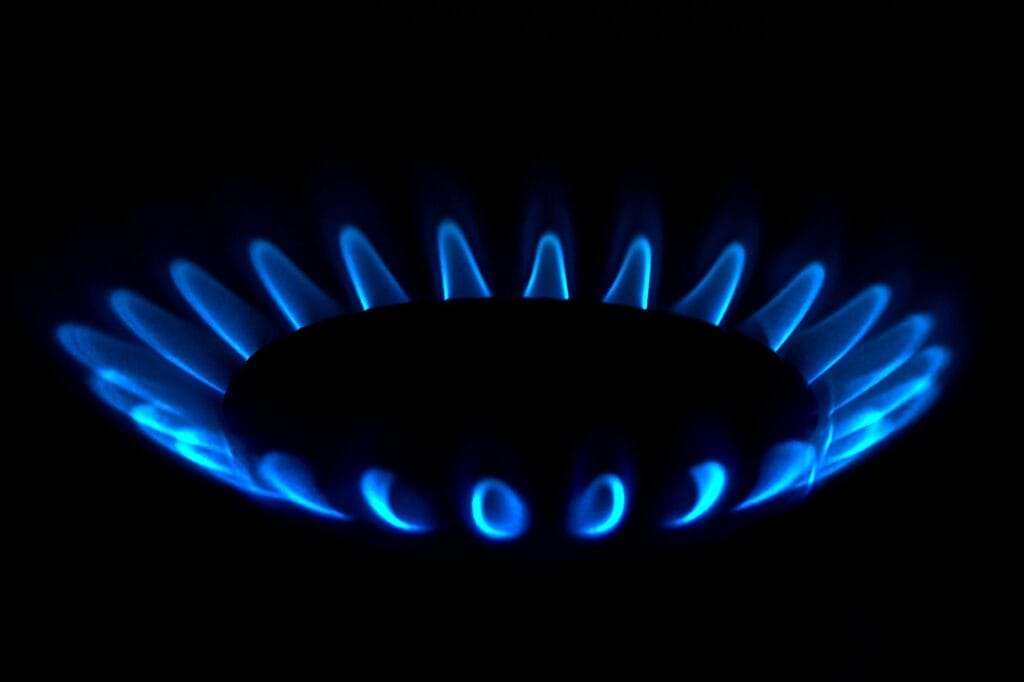
The result is a competition for power that the grid cannot accommodate quickly enough. A telling indication came in May, when The Guardian reported that more than 100 UK data centre projects now intend to burn gas on site to generate their own electricity rather than wait years for a grid connection. The IEA expects natural gas and coal together to meet more than 40% of the additional data centre demand worldwide to 2030.
The uncomfortable implication behind the trillion-dollar listings is that a sector which presents itself as the future is, in many locations, being sustained by on-site fossil generation. The irony is difficult to ignore: some of the world’s most advanced computing systems are being enabled by nineteenth-century fuels. It is a decarbonisation problem concealed within a growth story.
Waste as an overlooked asset
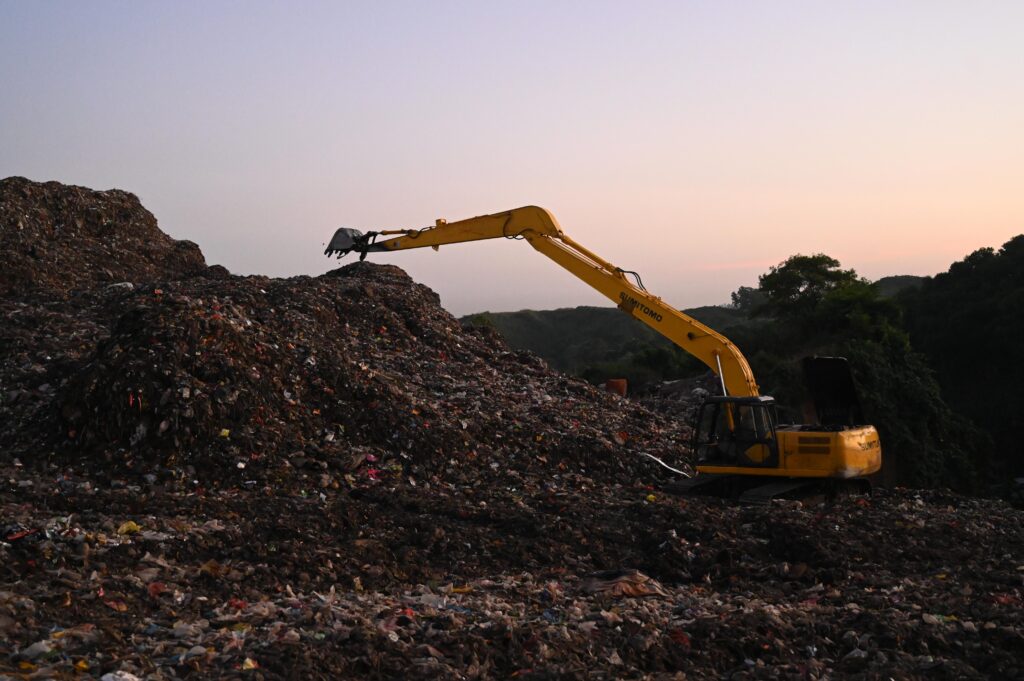
There is a more constructive approach to that on-site generation, and it begins with a resource the UK currently pays to dispose of.
Each year the country produces substantial volumes of food waste, agricultural residues and manure. Most of it represents a cost, with operators paying a gate fee for its removal. Equisera’s RiPR (Rising Pressure Reformer) technology is designed to convert that material into useful energy. Using supercritical water reforming, it converts wet organic wastes into biomethane and hydrogen while enabling carbon capture, producing fuels that have the potential to be carbon-negative when the feedstock is biogenic.
The relevance to data centres is direct. The biomethane RiPR produces is a drop-in substitute for natural gas. Its significance lies in the fact that it integrates with the infrastructure operators are already adopting: the same turbines and engines, supplied with a lower-carbon, locally sourced fuel in place of imported fossil gas. The hydrogen output is suited to fuel-cell backup, the form of resilient, dispatchable power on which these sites depend.
This is precisely the tier of demand that cannot wait years in the connection queue. Local, dispatchable and quick to deploy, it matches the profile of a distributed waste-to-fuel plant rather than that of a grid connection still years away. Because the input is waste, the economics begin from a different position. A disposal liability becomes a local fuel supply. In effect, the economics begin with being paid to accept the feedstock before any energy is sold – a fundamentally different starting point from most renewable fuel pathways.
None of this positions RiPR as the complete answer to the energy demands of AI. Renewables, storage, nuclear and grid reform will each carry a far greater share of that load. But the on-site and backup generation that data centres are now turning to is precisely where a waste-derived fuel can make a meaningful contribution. Most grid biomethane today is a relatively expensive, subsidy-supported fuel because projects pay for their inputs. RiPR’s input is the reverse: a waste stream that already carries a gate fee. It is this that gives a waste-to-fuel model the potential to approach fossil-fuel cost parity, rather than merely lower carbon.
The real climb
The IPO wave is a milestone, and a deserved one. Yet the harder and less glamorous undertaking lies not in the models but in the megawatts. The companies, and the governments supporting them, will spend the coming decade answering a single question, and it is not how capable the machines can become, but where their power will come from, how clean it will be and how quickly it can be built.
That is the real test for a Type 0.7 civilisation seeking to become something more: not whether it can build a more capable machine, but whether it can power one without burning the planet on which it still depends. What is notable is that part of the answer is not exotic at all. It lies in the food waste, farm residues and manure that the country currently pays to dispose of.
Converting that liability into fuel achieves more than powering a data centre. It removes a cost for the farmers, waste operators and industrial sites that generate the waste, and it represents a small step up the one ladder every civilisation has had to climb.
The most significant infrastructure decisions of the AI era may prove to be those that look least like AI: how we manage waste, produce fuel and build resilient energy systems. The intelligence may be artificial, but the energy challenge is profoundly physical.
References
- Anthropic IPO filing and valuation: CNBC, Anthropic confidentially files IPO prospectus with SEC (1 June 2026); PYMNTS, Morgan Stanley and Goldman Sachs Land Anthropic IPO (3 June 2026).
- SpaceX IPO completion: Nasdaq Newsroom, SpaceX (SPCX) opens trading at $150 per share (12 June 2026); Reuters, SpaceX raises $75 billion at $1.75 trillion valuation.
- OpenAI confidential filing: CNBC, OpenAI to confidentially file for IPO (20 May 2026); targeting September to November 2026 listing window.
- Trillion-dollar listing wave: Axios, Anthropic IPO storylines to watch (2 June 2026).
- Big Tech capex and data centre electricity growth: International Energy Agency, Key Questions on Energy and AI and accompanying news release (April 2026).
- 945 TWh by 2030 projection: IEA, Energy and AI – Energy demand from AI.
- UK grid connection queue and 140 schemes / 50GW: Ofgem connections consultation, reported in Engineering & Technology (2 March 2026).
- UK fivefold demand growth: Oxford Economics, The UK’s data centre boom (February 2026).
- 100+ UK projects planning on-site gas generation: The Guardian, reported May 2026.
- Gas and coal meeting 40%+ of additional demand to 2030: IEA, Energy supply for AI.
- Biomethane cost and subsidy context: DESNZ Green Gas Support Scheme; 2025 UK levelised cost analysis (around £90/MWh), via Xoserve (February 2026).