Proof it works. Proof we can repeat it. Equisera completes its first Welding Procedure Qualification in Inconel 617
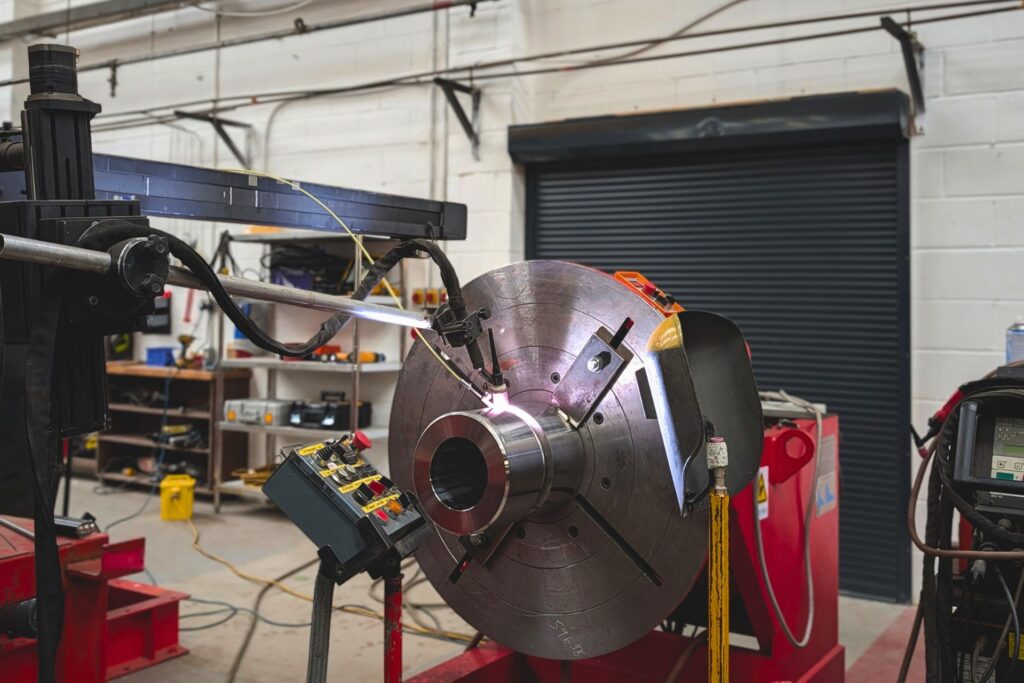
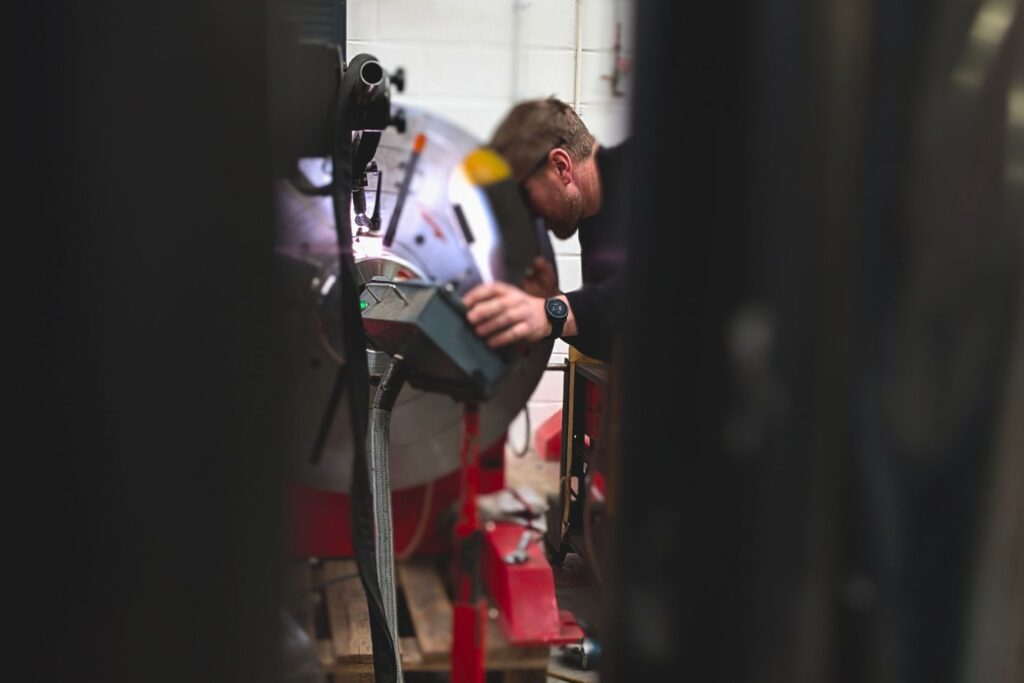
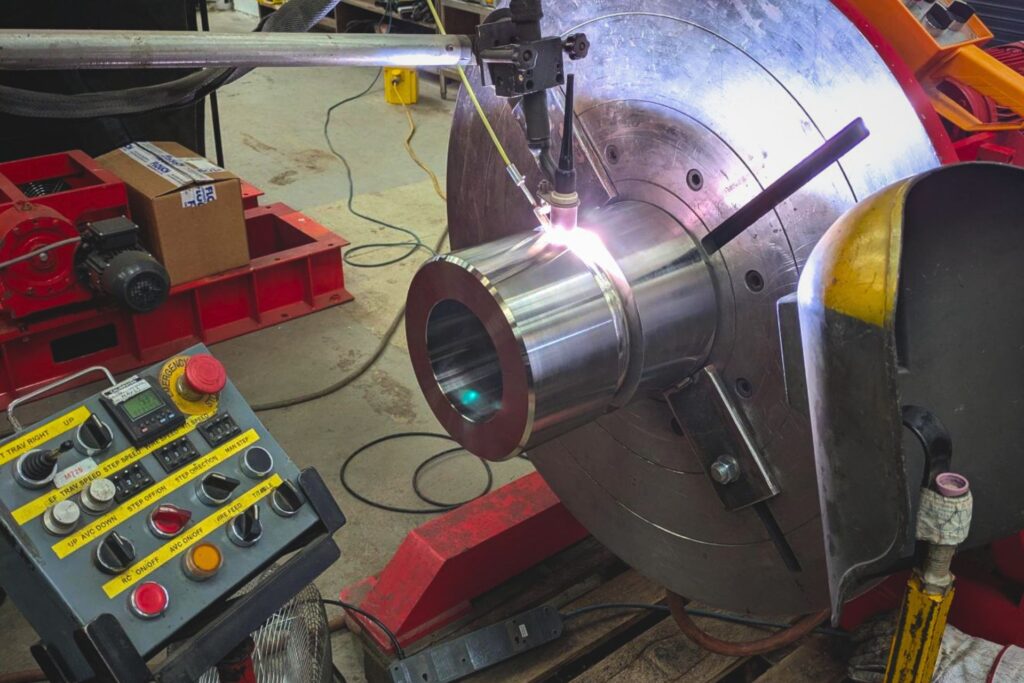
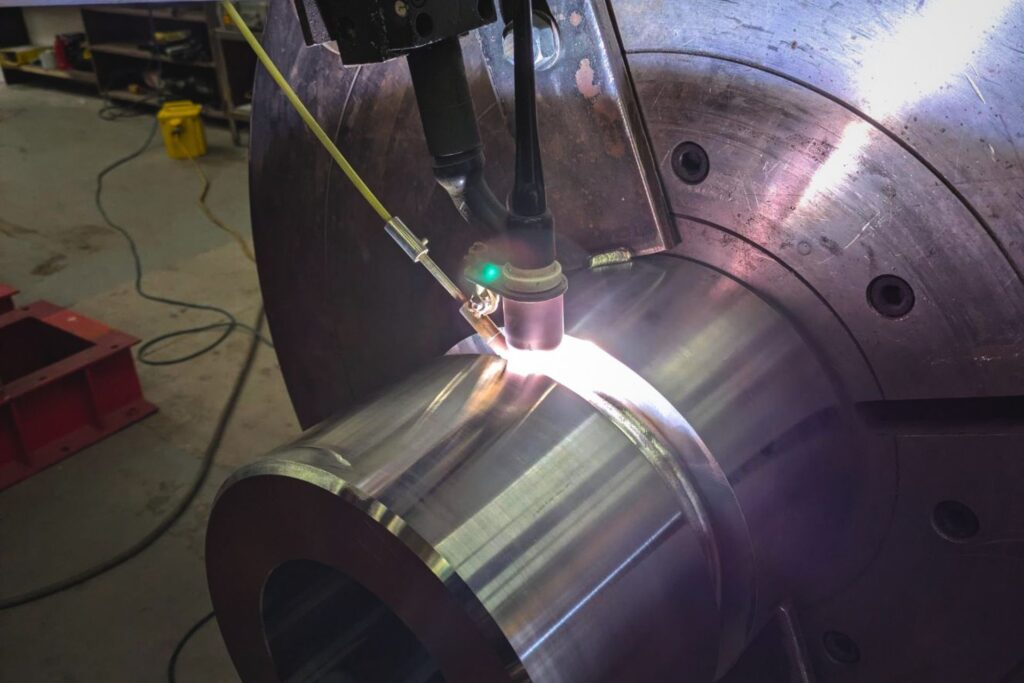
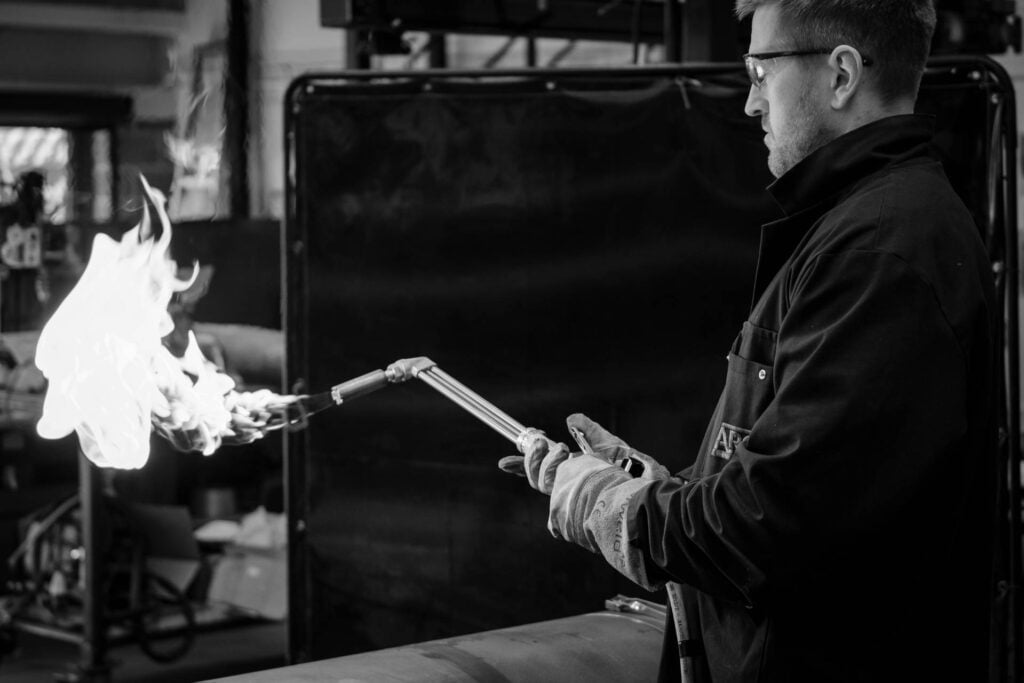
In April 2026, Equisera reached a quiet but significant engineering milestone. Rob Hine, one of our coded welders completed our first ever Welding Procedure Qualification Record (WPQR) in Inconel 617 – the high-performance nickel alloy used in the construction of our RiPR reactors.
It’s the kind of milestone that doesn’t usually make headlines. But for a hardware company moving from prototype to repeatable production, it matters enormously.
Why Inconel 617?
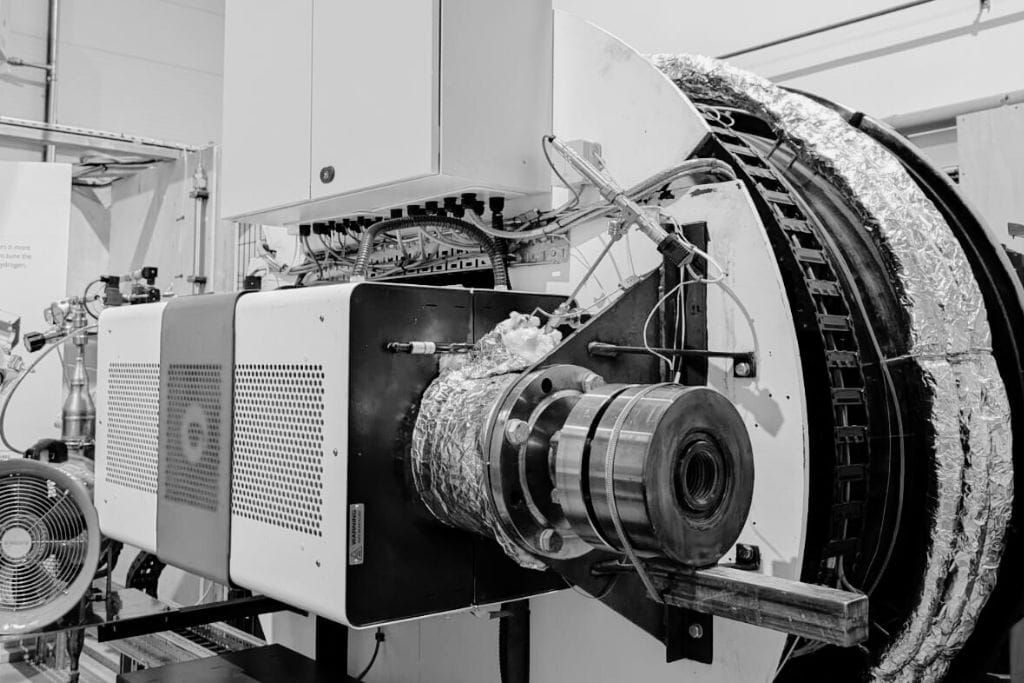
Our RiPR (Rising Pressure Reformer) technology operates above 374 degrees Celsius and 221 bar – the conditions required for supercritical water reforming. At these temperatures and pressures, conventional materials simply aren’t an option.
Inconel 617 is a nickel-chromium-cobalt-molybdenum alloy specifically engineered for high-temperature, high-pressure environments. It offers exceptional resistance to oxidation and creep, and retains its mechanical strength at temperatures where lesser materials would fail. It’s the right material for the job – but it’s also a notoriously demanding material to weld.
That’s why qualifying our welding procedure for Inconel 617 is such a meaningful step.
What is a WPQR, and why does it matter?
A Welding Procedure Qualification Record (WPQR) is the formal proof that a specific welding procedure produces welds that meet the required mechanical, metallurgical and integrity standards.
It’s a process, not just a document. It involves:
- A coded welder producing a test weld under controlled conditions
- Continuous recording of every welding parameter, including interpass temperatures, throughout the process
- Independent witnessing by a qualified third party
- Non-destructive testing (NDT) and mechanical testing of the completed weld at an accredited laboratory
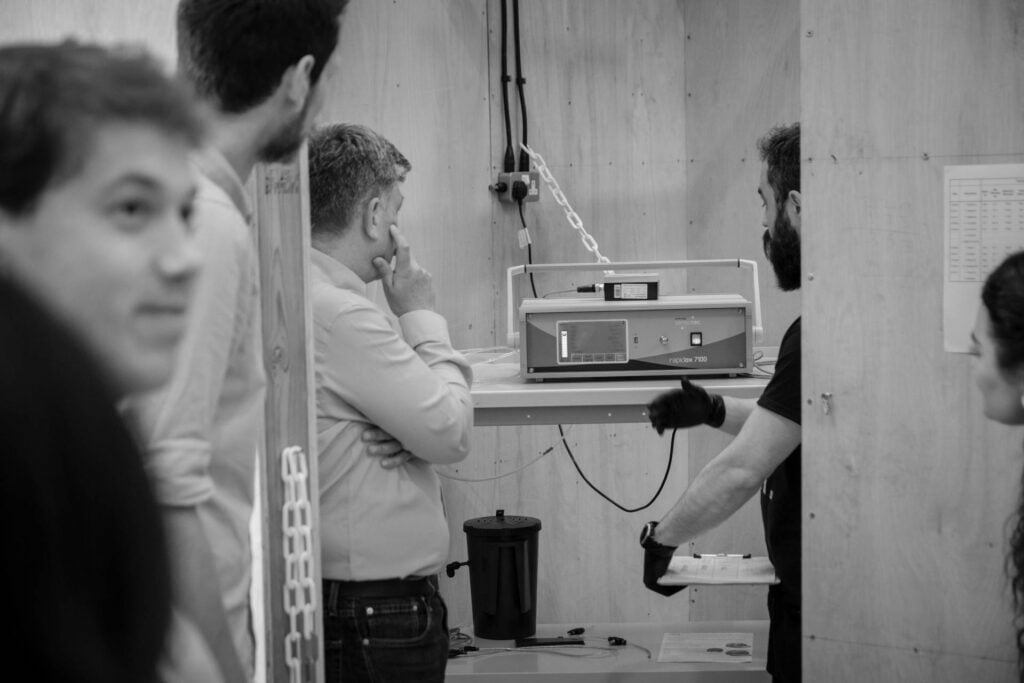
For our qualification, the process was witnessed by Code A Weld, a UK specialist in welding inspection, testing and certification. Their independent oversight gives confidence that the procedure has been rigorously tested and verified to industry standards.
Once the test weld passed all the required inspections, the data captured in the PQR was used to generate a Weld Procedure Specification (WPS) – the working document our team will use on the production floor.
In simple terms:
- The PQR is the proof it works
- The WPS is how we repeat it, consistently, every time.
Why we do this in-house
Equisera engineers and manufactures RiPR technology in-house, with our own team of certified welders, engineers and technicians. That decision is deliberate.
Owning fabrication means we control quality at every step. It allows us to iterate quickly between design and build. It builds deep technical knowledge inside the company. And it gives us the foundation for repeatable, scalable production as we move from demonstrator to commercial deployment.
Qualifying our own welding procedures – rather than relying entirely on external suppliers – is a core part of that capability.
What this means for RiPR
With this WPQR in place, our Inconel 617 reactors can now be fabricated and welded to the high standards the industry requires. It’s one more piece of the foundation that turns a working prototype into deployable infrastructure.
Our challenge as a company is no longer whether RiPR works. It’s how we make it work reliably, repeatably and at scale – delivering carbon-negative biomethane and hydrogen at fossil-fuel cost parity.
Milestones like this one are how we get there. Procedure by procedure. Weld by weld.
Well done to our engineering and welding team, and thanks to Code A Weld for the rigorous oversight.