How it Works
RIPR EXPLAINED
Rising Pressure Reformer
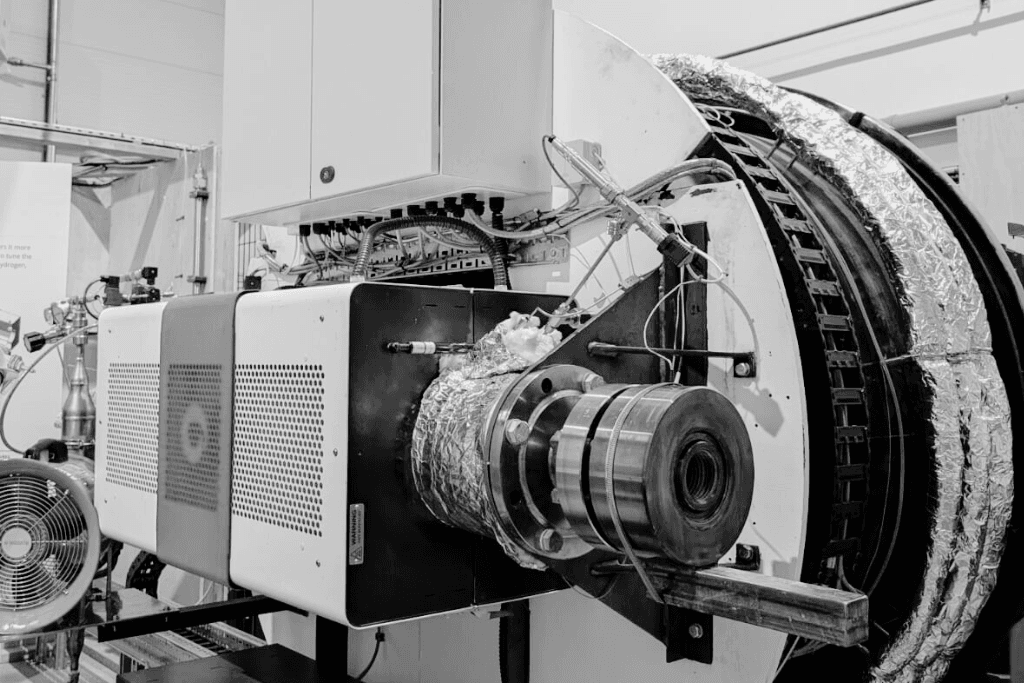
Our Rising Pressure Reformer (RiPR) technology is – at its heart – very simple. It turns biogenic material into clean gases, primarily biomethane and hydrogen through supercritical water reformation (SCWR).
Biogenic material is anything generated by living organisms. This includes things like plant matter but also hydrocarbons such as plastics.
Because RiPR is based on reformation rather than electrolysis, it does not rely on large amounts of electricity. Instead, it uses the chemical energy within the feedstock itself, making the process inherently more energy-efficient and less dependent on grid power. By adjusting operating conditions, the process can be tuned to favour different outputs, including biomethane, hydrogen and carbon removal products such as captured carbon dioxide and biochar.
Read through the process below to understand how it works in more detail.
SCWG EXPLAINED
Supercritical
Supercritical water reforming (SCWR) operates above water’s critical point, at temperatures above 374 °C and pressures above 221 bar. In this supercritical state, water behaves neither as a liquid nor a gas, combining liquid-like solvency with gas-like diffusivity.
These properties create a single-phase reaction environment with low viscosity, high mass transfer and strong miscibility with organic materials, enabling fast and efficient reactions. RiPR leverages this behaviour to break down complex biogenic materials directly, without drying or extensive pre-treatment.
Wet, mixed feedstocks, including plant matter, agricultural residues, food waste and certain hydrocarbons such as plastics, can be converted into usable energy. This allows RiPR to produce biomethane and hydrogen efficiently, while supporting integrated carbon capture in a robust, industrially scalable process.
Inputs
Our RiPR technology is compatible with almost any biogenic feedstock, ranging from grown fuel crops to even waste materials.
Industrial Waste
|
Domestic Waste
|
Grown Fuel Crops
Herbal leys
Wood waste
Seaweed
Plastic waste
Agricultural residues
Municipal solid waste
Animal waste
Refuse derived from waste
Feedstock Flexibility
Our Rising Pressure Reformer (RiPR) technology is compatible with a wide range of biogenic material. This feedstock adaptability – combined with the need for minimal preparation – gives it significant advantages over alternative methods. For example, it is compatible with wet feedstocks and even waste streams, opening up a whole range of possibilities, as well as decreasing transport and processing costs.
Technology
Heat


Pressure
RiPR Technology
Unlike green hydrogen produced through electrolysis, our RiPR reactors have no requirement for large amounts of green electricity and can even operate without a mains grid connection. And the efficiency of the process, which uses a fraction of the energy to sustain itself, means biomethane and hydrogen at a competitive price is achievable.
Outputs
Mix of Gases
Hydrogen
Biomethane
Captured CO₂
Outputs
RiPR produces a controlled mixture of clean gases alongside solid carbon in the form of biochar. The gas stream can be used directly for energy applications or separated into its component gases, including hydrogen, biomethane and biogenic carbon dioxide, depending on end-use requirements.
Because the process generates very low levels of tars and contaminants, gas cleaning is minimal, reducing complexity and operating costs. Where gas separation is applied, carbon dioxide can be efficiently captured for use or storage, while hydrogen and biomethane are delivered as high-quality fuels for industrial, grid and transport applications. These gases can also be used as feedstocks for the production of e-fuels, supporting a wider range of synthetic fuel pathways.
Applications
The potential for decarbonisation using our gas is huge.
Transport
|
Industry
|
Energy
Farming
Steel production
Gas grid
Shipping
Construction
Electricity generation
Paper production
Breweries
Heavy road transport
Cement production
Aviation
Glass production
Fertiliser
Applications
RiPR produces a tunable mix of syngas, hydrogen and biomethane, allowing outputs to be matched to specific industrial and energy uses. This flexibility supports the decarbonisation of heat, power and fuel systems that currently rely on natural gas. Gaseous outputs can be used for industrial use, or supplied as feedstocks for e-fuels and synthetic fuels. With carbon captured during production and no carbon released at the point of hydrogen use, RiPR enables a pathway beyond carbon neutral towards carbon negative.
Alongside this, biochar provides a stable, carbon-rich material that can be used to improve soils, filter water and support environmental remediation, delivering permanent carbon sequestration alongside clean energy.